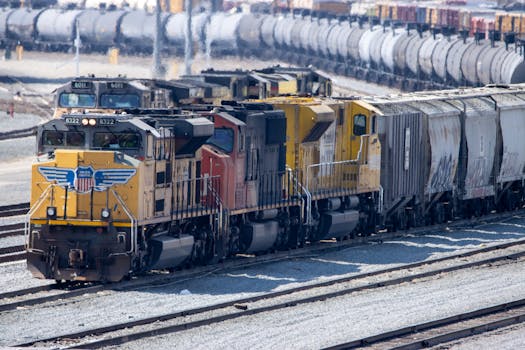

The global supply chain is a complex beast, riddled with potential blind spots. From raw materials to the final customer, knowing exactly where your goods are can feel like navigating a maze in the dark. Traditional tracking methods often fall short, relying on fragmented data and prone to manual errors. But what if there was a way to inject unprecedented transparency and security into this process? This is where blockchain, and specifically Solana, steps into the spotlight. Forget the hype; let’s talk practical application.
Why Blockchain for Supply Chain Visibility?
At its core, blockchain offers a decentralized, immutable ledger. Every transaction, every movement of a product, can be recorded as a block, linked chronologically to the previous one. This creates an indisputable audit trail. For supply chain management, this means:
Enhanced Traceability: Pinpoint the exact origin and journey of any item.
Fraud Prevention: Significantly reduce counterfeiting and illicit diversions.
Improved Efficiency: Streamline processes by reducing paperwork and manual reconciliation.
Increased Trust: Build stronger relationships with partners and customers through shared, verifiable data.
While blockchain sounds promising, the choice of platform is crucial. Not all blockchains are built equal for enterprise-level solutions.
Solana’s Edge: Speed, Scalability, and Cost-Effectiveness
When we talk about using Solana for tracking goods, we’re leveraging a blockchain designed for high throughput and low transaction fees. This is critical for supply chains that generate a massive volume of data points.
Transaction Speed: Solana’s architecture allows for thousands of transactions per second. For a global supply chain, this means real-time updates, not delays. Imagine scanning a pallet and having its location updated globally instantaneously.
Scalability: As your operations grow and you onboard more partners, Solana can handle the increased load without significant performance degradation. This is a dealbreaker for many businesses considering blockchain adoption.
Cost: Traditional blockchains can incur high transaction fees, making widespread data logging prohibitively expensive. Solana’s low fees make it economically viable to record every step of a product’s journey. This is a significant practical advantage for implementing use Solana for tracking goods on a large scale.
Practical Steps: Implementing Solana for Your Supply Chain
So, how do you actually go about using Solana for tracking goods? It’s not just about writing smart contracts; it’s about integrating with your existing systems and workflow.
#### 1. Define Your Tracking Needs and Data Points
Before diving into technology, clearly map out what you need to track.
What are the critical milestones for your goods? (e.g., manufacturing completion, customs clearance, warehouse receipt, delivery confirmation).
What data needs to be associated with each milestone? (e.g., timestamps, GPS coordinates, sensor readings like temperature or humidity, quality control results, responsible party).
Who needs access to this information, and at what level?
This foundational step ensures you’re building a solution tailored to your specific business challenges.
#### 2. Develop or Integrate Blockchain Solutions
This is where the technical implementation begins. You have a few paths:
Build Custom Applications: Develop decentralized applications (dApps) that interact directly with the Solana network. This offers maximum flexibility but requires significant development resources. You’ll likely be using languages like Rust or C++.
Leverage Middleware Platforms: Many companies are emerging that provide blockchain-as-a-service (BaaS) or specialized supply chain solutions built on top of Solana. These platforms abstract away some of the complexity, allowing you to integrate more easily with your Enterprise Resource Planning (ERP) or Warehouse Management System (WMS). These platforms often provide APIs for seamless data flow.
Utilize NFTs for Unique Identification: For high-value or unique items, Non-Fungible Tokens (NFTs) on Solana can serve as unique digital twins. Each NFT can represent a specific product or batch, carrying its entire history and ownership trail on the blockchain.
When considering how to use Solana for tracking goods, think about which approach best fits your technical capabilities and budget.
#### 3. IoT Integration for Automated Data Capture
The real power of blockchain in supply chains is unlocked when combined with the Internet of Things (IoT).
Smart Sensors: Deploy sensors on your goods or within your logistics infrastructure to automatically capture environmental data (temperature, humidity, shock).
GPS Trackers: Integrate GPS devices that transmit location data at regular intervals.
RFID/QR Codes: Use these for easy scanning at various checkpoints, triggering data uploads to the blockchain.
These IoT devices can then be configured to send data directly to a smart contract on Solana or to a middleware platform that orchestrates the blockchain transaction. This automates the process, drastically reducing human error and ensuring data integrity.
#### 4. Onboarding Partners and Establishing Consensus
A supply chain is only as strong as its weakest link. For effective tracking, all relevant partners (suppliers, manufacturers, logistics providers, distributors) need to participate.
Define Roles and Permissions: Clearly outline who can input data and who can view it. Solana’s flexibility allows for granular control over access.
Educate and Train: Ensure all stakeholders understand the benefits and how to use the system.
Incentivize Participation: Consider how to encourage reluctant partners to join the network. This could be through cost savings, improved dispute resolution, or enhanced visibility they gain.
The success of any initiative to use Solana for tracking goods hinges on collaborative adoption.
Overcoming Challenges in Implementation
While the benefits are clear, implementing blockchain for supply chain tracking isn’t without its hurdles.
Initial Investment: Setting up the infrastructure and integrating systems requires an upfront investment.
Data Standardization: Ensuring all partners use consistent data formats can be challenging.
Regulatory Clarity: The regulatory landscape for blockchain is still evolving in many regions.
* Change Management: Shifting from established, often manual, processes to a digital, decentralized system requires careful change management.
However, these challenges are becoming increasingly manageable as the technology matures and more practical solutions emerge.
The Future is Transparent
The ability to use Solana for tracking goods represents a significant leap forward in supply chain management. It moves us from reactive problem-solving to proactive risk mitigation and unparalleled transparency. By leveraging Solana’s speed, scalability, and cost-efficiency, businesses can build more resilient, trustworthy, and efficient supply chains.
What specific bottleneck in your current supply chain could blockchain visibility solve today?